
Learn practical and emotionally intelligent ways to handle family conflicts without harming relationships. Discover healthy communication, patience, and conflict-resolution strategies.
How to Handle Family Conflicts Without Damaging Relationships
Family is the place where we expect the most love, trust, and emotional support. It is where we feel safe and understood. But the truth is that family is also the place where conflicts happen most often.
Differences in opinions, generational gaps, financial decisions, personal expectations, or even small misunderstandings can sometimes turn into serious arguments. This is natural because every member of a family has a different personality, perspective, and life experience.
However, the real challenge is not the conflict itself.
The real challenge is handling those conflicts without damaging the relationships that matter the most.
When approached with patience and emotional maturity, family conflicts can actually become opportunities to understand each other better and strengthen relationships.
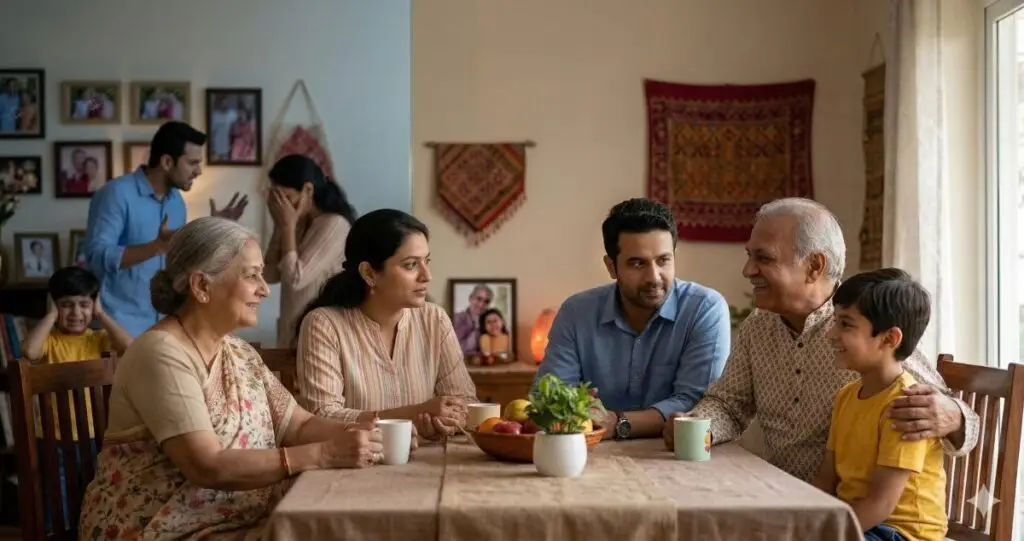
1. Accept That Conflicts Are Natural in Every Family
No two people think exactly the same way. Even people who love each other deeply may disagree on many things.
In every family you will find:
-
Different personalities
-
Different priorities
-
Different emotional reactions
-
Different ways of seeing life
Because of these differences, disagreements are unavoidable. Instead of seeing them as a sign that something is wrong with the relationship, it is healthier to see them as a normal part of human interaction.
Understanding this simple truth can already reduce a lot of unnecessary tension.
2. Prioritize the Relationship Over Winning the Argument
Many conflicts become worse because people focus on proving that they are right.
But in family relationships, the question should not be “Who is right?”
The real question should be:
“Is winning this argument more important than protecting the relationship?”
In most situations, the answer is clearly no.
Sometimes letting go of the need to win can prevent unnecessary emotional damage. Wisdom in family relationships often lies in protecting the bond rather than proving a point.
3. Avoid Discussing Sensitive Issues in Anger
Anger is one of the biggest reasons family conflicts escalate quickly.
When emotions are high, people often say things they later regret. Words spoken in anger can stay in someone’s memory for years.
If you feel that the conversation is becoming heated:
-
Pause the discussion
-
Take a short break
-
Continue the conversation later
A calm mind can solve problems that an angry mind cannot.
4. Learn to Truly Listen
One of the most common problems in family conflicts is that people listen to respond, not to understand.
While the other person is speaking, we often prepare our reply instead of genuinely hearing their feelings.
But when someone feels truly heard, half of the conflict already begins to dissolve.
Listening carefully shows respect and helps you understand the real concern behind the words.
5. Do Not Bring Up Old Mistakes
A major reason why family arguments become deeper and more painful is the habit of bringing up past issues again and again.
Statements like:
-
“You always do this.”
-
“You did the same thing years ago.”
-
“You never change.”
These kinds of comments turn a small disagreement into a long emotional battle.
It is far healthier to focus only on the present issue instead of reopening old wounds.
6. Sometimes the Best Solution Is a Middle Path
Not every family conflict needs a clear winner.
In many cases, the healthiest solution is a balanced middle ground where everyone makes a small adjustment.
This is often called compromise, but it should not be seen as weakness.
In reality, compromise often reflects emotional maturity and respect for the relationship.
7. Maintain Respect Even During Disagreements
Respect is the foundation of every strong relationship.
Even during disagreements, it is important to avoid:
-
Insulting language
-
Personal attacks
-
Mocking someone’s weaknesses
-
Disrespectful tone
Once respect is damaged, repairing the relationship becomes much harder.
Disagreement is normal.
Disrespect is not.
8. Sometimes Time Itself Heals the Conflict
Not every issue needs an immediate solution.
Sometimes the best decision is to give the situation some time.
With time:
-
Emotions settle down
-
Perspectives change
-
Problems start looking smaller
Distance from the conflict often brings clarity.
9. Never Let Communication Completely Stop
One of the most harmful things that can happen in a family is complete silence between members.
When communication stops, misunderstandings grow silently.
Even if the conversation becomes limited for some time, it is important to keep some level of communication alive. Small conversations often rebuild broken bridges.
Conclusion
Family relationships are among the most valuable parts of life. They require patience, understanding, and emotional wisdom.
Conflicts will happen — that is a natural part of human relationships. But the way we handle those conflicts determines whether relationships become stronger or weaker.
By practicing patience, listening with empathy, maintaining respect, and focusing on solutions rather than blame, most family conflicts can be resolved without damaging the bond.
In the end, the greatest victory in a family is not proving that you are right.
The real victory is preserving love, respect, and connection.