
Struggling with friendship issues? Learn the most common friendship problems, their causes, and practical ways to fix them. Improve trust, communication, and healthy relationships naturally.

Friendship is one of the most valuable parts of human life. A true friend can support us during difficult times, celebrate our success, and make life feel less lonely. But even the strongest friendships are not perfect. Misunderstandings, distance, jealousy, lack of communication, and changing priorities can slowly damage relationships that once felt unbreakable.
The truth is simple: friendship problems are normal. What matters is how we handle them.
In today’s fast-moving world, many people silently lose good friends because they do not know how to solve conflicts in a healthy way. Some friendships end over small misunderstandings that could have been fixed with one honest conversation. Others slowly fade because both people stop making efforts.
This article explores some of the most common friendship problems and practical ways to fix them. Whether you are trying to save an old friendship or build healthier relationships in the future, these ideas can help.
1. Lack of Communication
Communication is the foundation of every strong friendship. When friends stop talking openly, confusion and emotional distance begin to grow.
Sometimes people become busy with work, studies, family responsibilities, or personal struggles. Messages remain unanswered, calls become rare, and gradually both people start feeling ignored.
How to Fix It
- Start an honest conversation instead of making assumptions.
- Avoid blaming language like “You never care anymore.”
-
Use calm and respectful words such as:
“I miss our conversations. Is everything okay?”
- Make small efforts regularly instead of waiting for special occasions.
- Even a short message can keep a friendship alive.
Good communication does not mean talking every hour. It means making each other feel valued and respected.
2. Misunderstandings and Overthinking
Many friendships break because people assume things without asking questions. A simple joke, delayed reply, or different tone can create unnecessary misunderstandings.
Overthinking often turns small situations into emotional battles.
How to Fix It
- Ask directly instead of imagining the worst.
- Give your friend a chance to explain.
- Listen carefully before reacting emotionally.
- Never involve other people before understanding the full situation.
A mature friendship grows stronger through clarity, not assumptions.
3. Jealousy and Comparison
Jealousy is more common in friendships than most people admit. Sometimes one friend becomes more successful, financially stable, popular, or emotionally confident. Instead of feeling happy, the other person may silently feel insecure.
Social media has made this problem even bigger. Constant comparison destroys inner peace and damages relationships.
How to Fix It
- Understand that every person has a different journey.
- Celebrate your friend’s success genuinely.
- Focus on improving your own life instead of competing.
- Avoid comparing careers, relationships, income, or lifestyles.
True friendship is not a competition. Real friends grow together instead of pulling each other down.
4. One-Sided Effort
Some friendships become emotionally exhausting because only one person keeps trying. One friend always calls first, checks in, plans meetings, and solves conflicts while the other gives very little effort.
Over time, this imbalance creates frustration and emotional fatigue.
How to Fix It
- Stop forcing the friendship aggressively.
- Communicate your feelings honestly.
- Observe whether the other person values the relationship.
- Learn to maintain balance and self-respect.
Healthy friendships require effort from both sides. If only one person keeps carrying the relationship, it eventually becomes emotionally unhealthy.
5. Trust Issues
Trust is difficult to build and easy to break. Sharing secrets, breaking promises, gossiping, or lying can seriously damage a friendship.
Once trust is broken, even normal conversations start feeling uncomfortable.
How to Fix It
If you made the mistake:
- Accept responsibility honestly.
- Apologize sincerely without excuses.
- Give the other person time to heal.
If your friend broke your trust:
- Discuss the issue calmly.
- Decide whether the mistake was intentional or immature.
- Set clear boundaries moving forward.
Not every friendship can survive broken trust, but honest effort can sometimes rebuild it slowly.
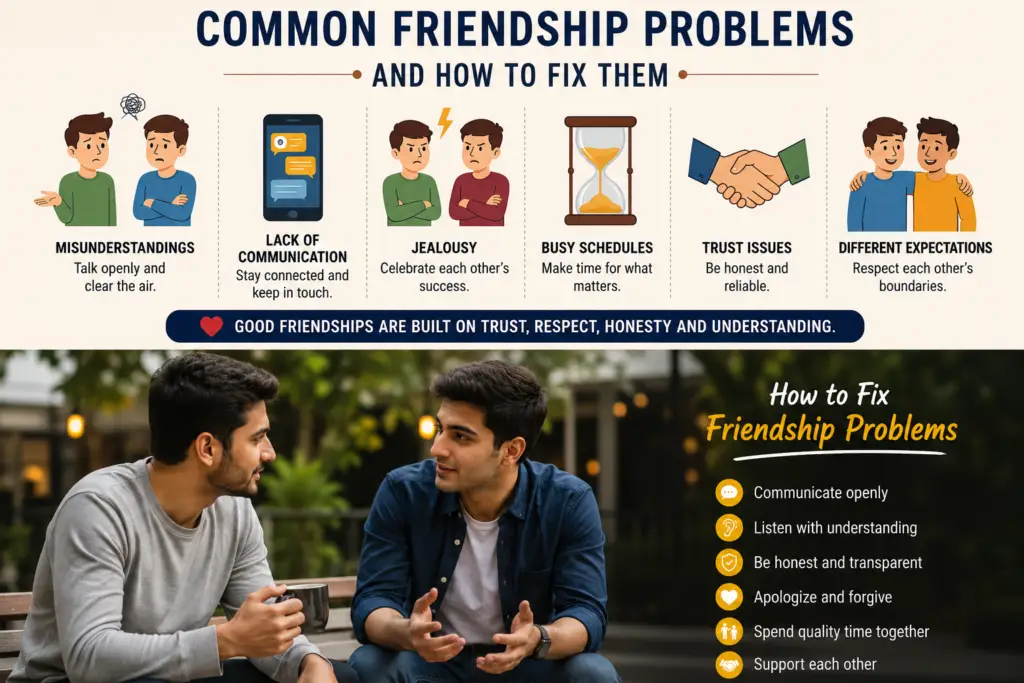
6. Friends Changing Over Time
People change with age, experiences, careers, relationships, and responsibilities. A childhood friend may no longer think the same way after many years.
This change is natural, but many people feel hurt when friendships become different.
How to Fix It
- Accept that growth changes people.
- Avoid forcing old versions of friendships.
- Find new ways to connect.
- Respect emotional distance if necessary.
Sometimes friendships evolve instead of ending completely. Learning to accept change is part of emotional maturity.
7. Toxic Friendship
Not every friendship is healthy. Some people constantly insult, manipulate, control, or emotionally drain others while pretending to be friends.
Signs of toxic friendship include:
- Constant negativity
- Jealous behavior
- Emotional manipulation
- Lack of respect
- Using friendship only for personal benefit
How to Fix It
- Set strong boundaries.
- Reduce emotional dependence.
- Spend more time with positive people.
- If necessary, walk away peacefully.
Protecting your mental peace is not selfish. A friendship should bring support, not constant stress.
8. Distance and Busy Life
Long-distance friendships often become difficult because life becomes busy. Work pressure, marriage, studies, or moving to another city can reduce communication.
But distance does not always end real friendship.
How to Fix It
- Stay connected through small efforts.
- Schedule occasional calls or video chats.
- Remember important dates and moments.
- Be understanding when life becomes hectic.
Consistency matters more than frequency. Even rare conversations can keep a genuine friendship strong.
9. Ego and Refusing to Apologize
Many beautiful friendships end because neither person wants to take the first step after a conflict.
Ego creates emotional walls that become harder to break with time.
How to Fix It
- Understand that apologizing does not make you weak.
- Focus on solving the issue instead of winning the argument.
- Speak honestly and respectfully.
- Value the relationship more than temporary pride.
Sometimes one sincere message can save years of friendship.
10. Different Expectations
Some friends expect emotional support, while others prefer casual connections. Problems begin when expectations are unclear.
One person may expect loyalty and deep involvement while the other wants space and independence.
How to Fix It
- Communicate expectations openly.
- Respect personal boundaries.
- Avoid demanding unrealistic attention.
- Understand each other’s emotional style.
Healthy friendships grow through understanding, not pressure.
Final Thoughts
Friendship is not about perfection. It is about understanding, patience, honesty, and mutual respect. Every strong friendship faces challenges at some point, but problems do not always mean the relationship must end.
Many friendships can be repaired when both people are willing to communicate openly and treat each other with maturity.
At the same time, it is also important to recognize when a friendship becomes unhealthy. Not every relationship is meant to last forever, and sometimes letting go peacefully is healthier than holding on painfully.
A real friend is not someone who is present only during good times. A real friend is someone who respects your emotions, supports your growth, and stands beside you even during difficult moments.
In the end, strong friendships are built not by perfection, but by consistent care, trust, and understanding.