
Learn why trust issues develop, how they affect relationships, and practical ways to heal emotionally after betrayal, dishonesty, or emotional pain.
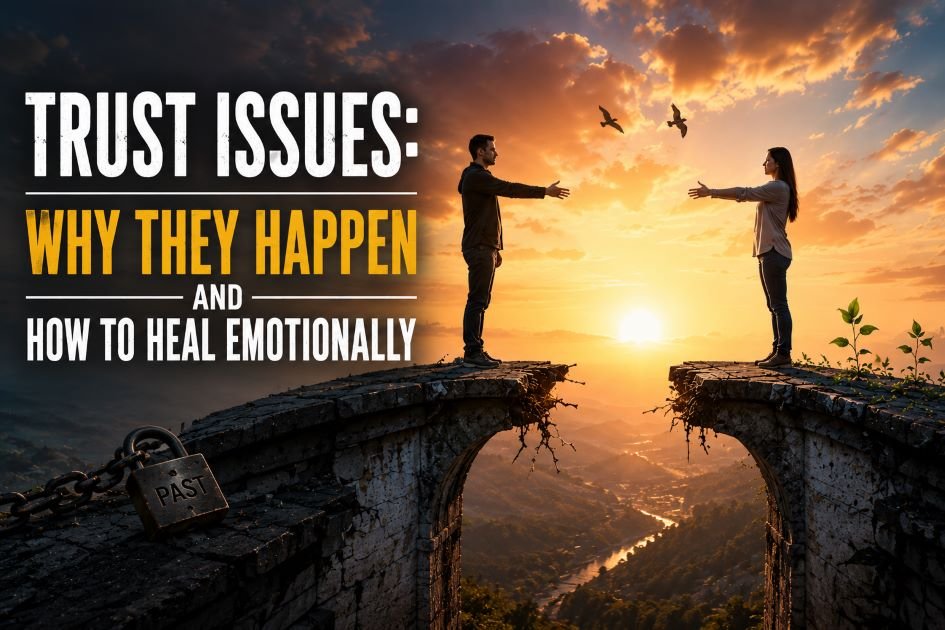
Trust is one of the most important parts of human relationships.
Without trust, even love begins to feel uncertain. Friendships become uncomfortable, relationships become emotionally exhausting, and the mind starts questioning every word, every promise, and every intention.
People with trust issues are often misunderstood. Some are called “overthinkers,” “insecure,” or “too sensitive.” But in many cases, trust issues are not created without reason. They usually develop after emotional pain, betrayal, disappointment, dishonesty, abandonment, or repeated emotional wounds.
The truth is simple:
A person who struggles to trust others is often someone who trusted deeply once before and got hurt badly.
This article is not about blaming people for their emotional fears. It is about understanding where trust issues come from, how they slowly affect life, and how healing becomes possible again with awareness, patience, and emotional honesty.
What Are Trust Issues?
Trust issues happen when a person finds it difficult to emotionally rely on others because they fear betrayal, dishonesty, rejection, or emotional pain.
This fear may appear in different ways:
- Overthinking simple situations
- Constantly expecting disappointment
- Difficulty opening up emotionally
- Fear of being lied to
- Checking messages or seeking reassurance repeatedly
- Avoiding emotional closeness
- Struggling to believe compliments or promises
Some people become emotionally distant to protect themselves. Others become extremely anxious and fearful in relationships.
Both reactions often come from the same root:
fear of being hurt again.
Trust Issues Usually Begin After Emotional Pain
Very few people are born with serious trust issues.
Most develop them through experiences.
Common Reasons Why Trust Issues Develop
- Betrayal in relationships
- Cheating or dishonesty
- Childhood emotional neglect
- Broken promises
- Toxic friendships
- Manipulation
- Abandonment
- Repeated disappointments
- Emotional humiliation
- Family conflicts
Sometimes even one deeply painful experience can change how a person views relationships forever.
The mind starts trying to protect itself from future pain by becoming suspicious, emotionally guarded, or overly cautious.
Unfortunately, while these defense mechanisms may reduce vulnerability temporarily, they can also damage healthy relationships later.
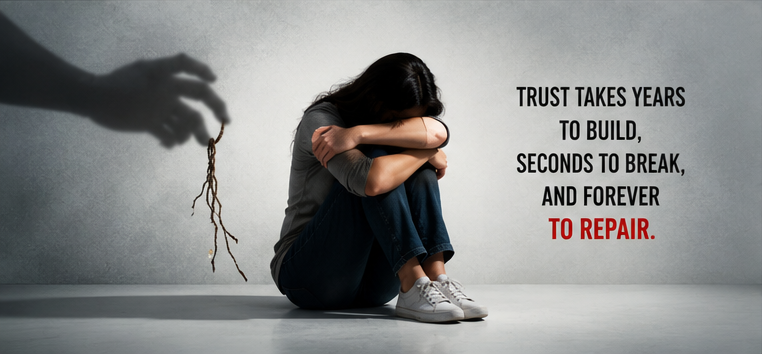
The Brain Remembers Emotional Pain
Emotional pain leaves psychological patterns behind.
When someone gets deeply hurt, the brain begins looking for danger signs everywhere to avoid repeating the same experience.
For example:
- If someone was cheated on, they may become suspicious easily.
- If someone was abandoned emotionally, they may fear closeness.
- If someone experienced manipulation, they may struggle to believe kindness.
This is not always irrational behavior.
The brain is trying to prevent future suffering.
The problem is that past pain sometimes starts controlling present relationships, even when the current people involved are different.
Trust Issues Can Quietly Damage Relationships
Trust problems affect both romantic and non-romantic relationships.
Over time, constant fear and suspicion create emotional pressure.
A relationship may begin suffering from:
- Frequent misunderstandings
- Emotional distance
- Jealousy
- Overchecking behavior
- Fear of vulnerability
- Difficulty communicating openly
- Emotional exhaustion
Ironically, people with trust issues often desire love and emotional safety deeply, but their fear of pain makes closeness feel dangerous at the same time.
This creates internal conflict.
They want connection, but they also fear it.
Not Everyone Who Hurt You Deserves Permanent Control Over Your Future
One painful truth many people realize late is this:
A few dishonest people can completely change how someone views the world.
After betrayal, some individuals stop trusting everyone.
But carrying permanent emotional fear because of past experiences slowly damages personal peace.
Healing does not mean forgetting pain or becoming blindly trusting again.
It means learning how to protect yourself wisely without becoming emotionally imprisoned by old wounds.
There is an important difference between caution and emotional isolation.
Healthy healing allows balance.
The Difference Between Intuition and Fear
People with trust issues sometimes confuse fear with intuition.
Intuition is calm awareness.
Fear is constant anxiety.
For example:
- Intuition quietly notices consistent unhealthy behavior.
- Fear creates suspicion even without clear evidence.
Learning this difference is important.
Not every delayed reply, mood change, or disagreement means betrayal.
Sometimes anxiety creates stories that reality never intended.
This is why emotional healing also requires improving self-awareness.
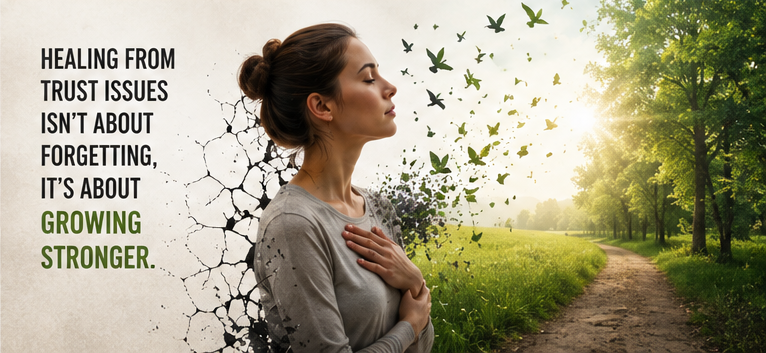
Healing Trust Issues Takes Time
Trust issues usually do not disappear overnight.
Healing happens slowly through repeated safe experiences, emotional reflection, and inner work.
One honest relationship can sometimes repair years of emotional fear.
But healing also requires personal responsibility.
A person cannot expect others to constantly “prove” loyalty forever while refusing to work on their own emotional wounds.
Healing becomes possible when both self-awareness and emotional safety grow together.
Ways to Heal Trust Issues Gradually
1. Acknowledge the Original Pain
Many people deny how deeply they were affected by past betrayal.
Healing starts when emotional pain is honestly recognized instead of suppressed.
You cannot heal wounds you pretend do not exist.
2. Stop Assuming Everyone Will Repeat the Same Harm
Not all people are dishonest.
Not every relationship ends in betrayal.
Past experiences can teach caution without forcing permanent fear.
Each person deserves to be judged individually.
3. Improve Communication
Healthy communication reduces unnecessary misunderstandings.
Instead of silent overthinking, honest conversations create clarity.
Saying:
“I struggle with trust because of past experiences”
is healthier than emotionally withdrawing without explanation.
4. Learn to Observe Actions Calmly
Trust should not be blind.
Healthy trust grows through consistent behavior over time.
Instead of becoming suspicious instantly, observe patterns calmly.
Real character eventually becomes visible through actions.
5. Work on Self-Worth
People with low self-worth often fear abandonment more intensely.
They may believe:
- “I’m not enough.”
- “People always leave.”
- “I’ll get hurt again.”
Building inner confidence reduces emotional dependency and fear.
6. Avoid Emotional Testing
Some people test others repeatedly to feel safe.
Examples include:
- Creating jealousy intentionally
- Starting arguments to check reactions
- Expecting mind-reading
- Constant reassurance seeking
These behaviors usually create more emotional instability instead of trust.
Healthy relationships need honesty, not emotional games.
7. Accept That Absolute Certainty Does Not Exist
No relationship comes with 100% guarantees.
Trust always involves some emotional risk.
This truth feels uncomfortable, but accepting uncertainty is part of emotional maturity.
Love and connection require courage.
Trusting Again Does Not Mean Becoming Weak
Many people think emotional openness makes them vulnerable or foolish.
But healthy trust is not weakness.
In fact, staying emotionally kind after painful experiences often requires tremendous strength.
A person who heals without becoming bitter shows real emotional growth.
Protecting yourself wisely is healthy.
Completely shutting down emotionally is not.
The Role of Patience in Emotional Healing
Healing trust issues is rarely a straight path.
Some days a person feels emotionally open. Other days old fears return suddenly.
This is normal.
Emotional healing often happens in layers.
Patience matters deeply during this process.
Being harsh toward yourself for struggling emotionally only increases inner pressure.
Real healing usually looks quiet from the outside:
- Better emotional awareness
- Less overthinking
- Healthier communication
- More balanced reactions
- Greater inner peace
Small improvements matter more than perfection.
Final Thoughts
Trust issues are not simply about “being negative” or “thinking too much.”
They are often emotional scars left behind by painful experiences that deeply affected the heart and mind.
Healing does not happen by pretending the pain never existed.
It happens by slowly learning that while betrayal is possible, healthy and honest connections are also possible.
Not everyone will hurt you the way someone else did.
And most importantly:
Your past pain deserves understanding, but it should not permanently decide the future of every relationship in your life.
Trust may break painfully, but with time, awareness, and emotional healing, it can also be rebuilt again.