
Learn how self-discipline helps you stay consistent when motivation fades. Discover practical habits, mindset shifts, and proven strategies for long-term success and personal growth.

Almost everyone feels motivated in the beginning.
People start waking up early, exercising regularly, planning goals, learning new skills, or working on dreams with full energy. For a few days or weeks, everything feels exciting. Progress looks visible, and the future seems promising.
Then reality enters quietly.
The excitement becomes normal. Results slow down. The mind starts looking for comfort again. Suddenly, the same person who felt unstoppable begins postponing things, skipping routines, and losing consistency.
This is the point where most goals fail.
Not because people are incapable, but because they depend too much on motivation and too little on self-discipline.
Motivation is temporary. Self-discipline is what carries a person forward when emotions change, energy drops, and life becomes difficult.
This article is not based only on motivational quotes or unrealistic productivity advice. It is based on practical human behavior, real struggles, and the truth that consistency is often built during the days when nobody feels like continuing.
Motivation Feels Good, But It Is Unstable
Motivation is emotional energy.
Sometimes it comes naturally after watching an inspiring video, hearing success stories, or feeling emotionally excited about a new goal.
But emotions are temporary by nature.
A person cannot feel highly motivated every day. Stress, tiredness, personal problems, failures, and even weather changes can affect motivation levels.
That is why people who rely only on motivation often quit early.
Self-discipline is different.
Self-discipline means continuing important actions even when the mood is missing.
It is the ability to say:
“I may not feel like doing this today, but I know it still matters.”
That simple mindset changes lives over time.
Consistency Is More Powerful Than Intensity
One common mistake people make is trying to change their entire life overnight.
They create impossible routines:
- Wake up at 4 AM
- Exercise two hours daily
- Read multiple books weekly
- Stop every bad habit immediately
- Work nonstop without breaks
This usually works for a few days before mental exhaustion appears.
Real self-discipline is not extreme. It is sustainable.
Small consistent actions create stronger results than short periods of extreme effort.
For example:
- Reading 10 pages daily is better than reading 100 pages once a month.
- Exercising 20 minutes regularly is more effective than one exhausting workout every few weeks.
- Writing consistently improves skills faster than waiting for “perfect inspiration.”
Consistency may look slow, but it quietly builds powerful long-term results.
Stop Waiting to “Feel Ready”
Many people delay important work because they are waiting for the perfect mental state.
They believe:
- “I’ll start when my mood improves.”
- “I need more confidence first.”
- “Tomorrow I’ll feel more motivated.”
Unfortunately, tomorrow often looks exactly like today.
Self-disciplined people understand an important truth:
Action creates momentum more often than motivation creates action.
In simple words, starting usually feels harder than continuing.
Once the mind begins moving, resistance often becomes weaker.
That is why successful routines are built by beginning before emotions fully cooperate.
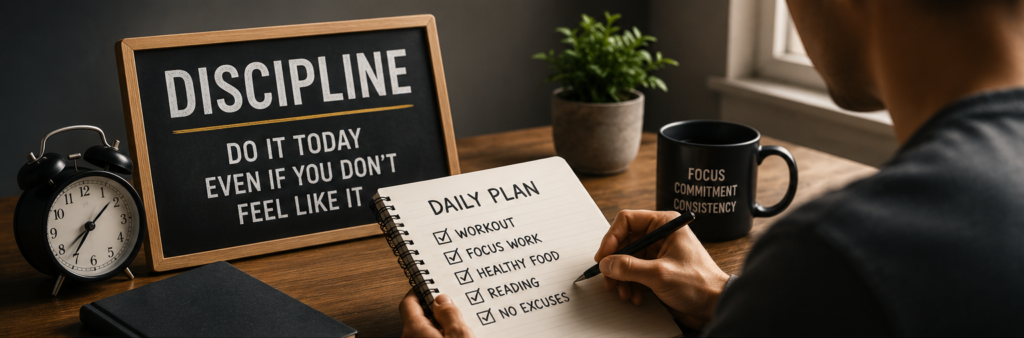
Discipline Is Built Through Repetition, Not Personality
Some people believe disciplined individuals are naturally stronger, mentally tougher, or born with better control.
That is not always true.
Most disciplined people simply trained themselves through repeated behavior.
At first, routines feel uncomfortable. The brain naturally prefers comfort, entertainment, and immediate pleasure.
But repeated actions slowly become identity.
For example:
- A person who exercises consistently begins seeing themselves as someone who values health.
- A writer who writes daily starts identifying as a disciplined creator.
- A student who studies regularly develops confidence naturally.
Self-discipline grows when actions are repeated long enough for the brain to accept them as normal behavior.
Remove the Habits That Quietly Destroy Consistency
Many people focus only on building good habits while ignoring the habits that drain mental focus and discipline.
Modern distractions are one of the biggest reasons consistency becomes difficult.
Constant scrolling, endless notifications, overconsumption of entertainment, and digital addiction reduce attention span and weaken focus.
The brain slowly becomes addicted to quick dopamine instead of meaningful progress.
This makes difficult tasks feel even harder.
Simple changes can help greatly:
- Reduce unnecessary screen time
- Avoid checking social media constantly
- Keep phones away during focused work
- Limit multitasking
- Protect quiet thinking time
Mental clarity improves when distractions decrease.
Self-Discipline Becomes Easier With Structure
People often depend too much on willpower.
But willpower changes daily.
Structure is more reliable.
Creating simple systems reduces decision fatigue and helps consistency feel easier.
Examples include:
- Fixed sleeping and waking times
- Scheduled work sessions
- Daily exercise timing
- Planning tomorrow the night before
- Keeping important tasks visible
A structured environment reduces mental chaos.
When routines become automatic, discipline requires less emotional struggle.
Learn to Continue Even After Bad Days
One of the biggest hidden secrets of disciplined people is this:
They do not expect perfection.
Most people quit because they miss one or two days and feel like they failed completely.
But consistency is not about never failing.
It is about returning quickly after setbacks.
Everyone experiences:
- Lazy days
- Emotional stress
- Low energy
- Distractions
- Temporary failures
The difference is that disciplined people restart faster instead of giving up completely.
Missing one workout does not destroy fitness.
Skipping one productive day does not destroy success.
Quitting entirely does.
Your Environment Influences Your Discipline
Environment shapes behavior more than people realize.
It becomes very difficult to stay disciplined in environments filled with constant negativity, distraction, or unhealthy habits.
For example:
- Staying productive becomes harder around highly distracted people.
- Healthy eating becomes harder in unhealthy environments.
- Focus becomes difficult in noisy and chaotic spaces.
Creating even a small positive environment helps consistency.
This may include:
- Keeping a clean workspace
- Spending time with focused people
- Following educational content
- Reducing negative influences
- Protecting mental peace
The environment around you either supports discipline or weakens it slowly.

Discipline and Mental Health Must Stay Balanced
Some people misunderstand self-discipline and turn it into self-punishment.
They push themselves constantly without rest, ignore emotional exhaustion, and feel guilty for slowing down.
This is unhealthy.
True discipline includes recovery.
Rest is not laziness when the body and mind genuinely need it.
A balanced person understands when to push forward and when to recover responsibly.
Mental burnout destroys consistency much faster than occasional rest.
The Quiet Confidence That Discipline Creates
One of the most beautiful benefits of self-discipline is internal confidence.
Not loud confidence for showing others.
Real confidence.
The kind that develops when a person repeatedly proves to themselves:
“I can trust myself to continue.”
This confidence changes many areas of life:
- Better emotional control
- Improved decision-making
- Stronger self-respect
- Greater patience
- Reduced dependence on external validation
Discipline slowly builds personal stability from within.
Practical Ways to Stay Consistent When Motivation Fades
1. Make Goals Smaller
Large goals create overwhelm. Smaller goals feel achievable.
2. Focus on Daily Systems
Do not obsess over results every day. Focus on repeating the process.
3. Start Before You Feel Ready
Action often creates energy afterward.
4. Reduce Distractions
Protect your attention like an important resource.
5. Accept Imperfect Progress
Slow progress is still progress.
6. Keep Returning
Bad days are normal. Restart quickly.
7. Remember Why You Started
Reconnect with the deeper reason behind your goal.
Final Thoughts
Motivation may help a person begin, but self-discipline is what helps them continue long enough to truly change their life.
Most meaningful achievements are not built through temporary excitement. They are built quietly through repetition, patience, sacrifice, and consistency during ordinary days.
There will always be moments when the mind wants comfort instead of effort.
That is normal.
The goal is not becoming a machine without emotions. The goal is learning how to keep moving forward without depending completely on temporary feelings.
Because in the end, the people who succeed are often not the most motivated.
They are the ones who kept going after motivation disappeared.