
Persistent Abdominal Pain with Normal Reports?
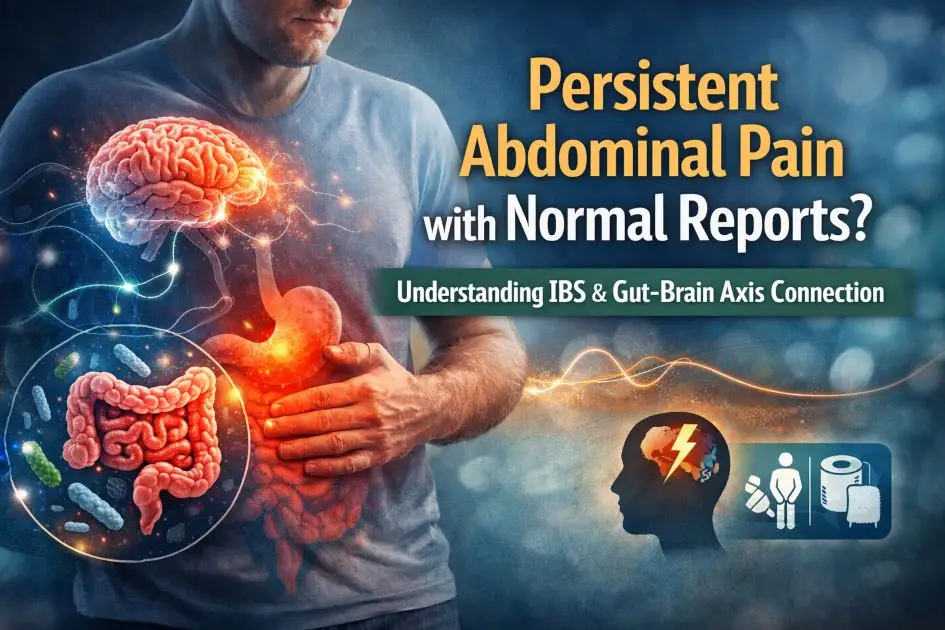
Understanding Suspected IBS & Gut–Brain Axis Involvement (Clear Explanation + Real Solutions)
Persistent abdominal pain despite normal investigations? Learn how IBS (Irritable Bowel Syndrome) and Gut–Brain Axis dysfunction can cause real pain even when reports are normal. Symptoms, causes, and practical recovery steps explained clearly.
When All Tests Are Normal — But the Pain Is Not
You’ve done the blood tests.
Ultrasound is normal.
Endoscopy shows nothing alarming.
Yet the abdominal pain continues.
At some point, someone says,
“Maybe it’s just stress.”
“Maybe you’re overthinking.”
But here is the truth:
Persistent abdominal pain with normal investigations is a medically recognized condition. It is often associated with Irritable Bowel Syndrome (IBS) and dysfunction of the Gut–Brain Axis.
And no — the pain is not imaginary.
recovery steps explained clearly.
What Exactly Is IBS?
IBS is classified as a functional gastrointestinal disorder.
This means:
-
The structure of the digestive system appears normal.
-
There is no visible ulcer, tumor, or inflammation.
-
But the function of the gut is disturbed.
In IBS:
-
The intestines may contract too fast or too slow.
-
The nerves in the gut become overly sensitive (visceral hypersensitivity).
-
The communication between the brain and gut becomes dysregulated.
So even normal digestion or mild gas can feel like significant pain.
Understanding the Gut–Brain Axis (In Simple Words)
The Gut–Brain Axis is a two-way communication system between:
-
The brain
-
The nervous system
-
The digestive tract
-
The gut microbiome
When you feel stressed:
-
Stress hormones like cortisol increase.
-
Intestinal movement changes.
-
Pain sensitivity rises.
-
Gut bacteria balance may shift.
That’s why:
-
You may get diarrhea before an interview.
-
You may feel stomach cramps during anxiety.
-
You may experience bloating during emotional stress.
This connection is biological — not psychological weakness.
Why Does the Pain Persist in IBS?
There are three main mechanisms:
1. Visceral Hypersensitivity
The gut nerves become overly reactive.
Normal intestinal movement feels painful.
2. Altered Gut Motility
Food moves too quickly (causing diarrhea) or too slowly (causing constipation), leading to cramps.
3. Stress Amplification
The brain amplifies pain signals during periods of anxiety or emotional overload.
This is why symptoms often worsen during stressful periods.
Is It Dangerous?
IBS:
-
Does not cause cancer.
-
Does not permanently damage the intestines.
-
Is not life-threatening.
However, it can significantly affect quality of life.
A Realistic Pattern Many People Experience
A person notices abdominal pain every evening after work.
All reports are normal.
After careful observation, they realize:
-
They suppress stress throughout the day.
-
Once they relax at home, symptoms begin.
-
Late caffeine intake worsens the discomfort.
After implementing:
-
20-minute evening walks
-
Reduced caffeine
-
Digital detox before bed
-
Regular sleep schedule
Within 6–8 weeks, symptoms reduced by more than half.
No magic.
Just nervous system regulation.
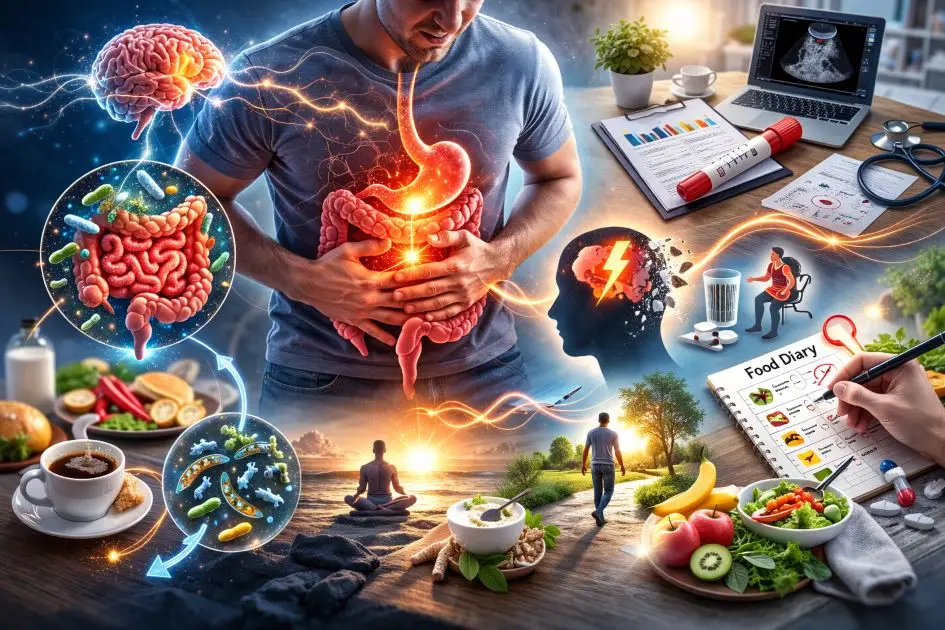
Practical Recovery Framework
There is no single “miracle pill.”
Improvement comes from a structured, consistent approach.
1. Track Your Food (3-Week Rule)
Maintain a simple food journal:
-
What you ate
-
When you ate
-
When symptoms appeared
Common triggers may include:
-
High FODMAP foods
-
Excess fried food
-
Lactose (in sensitive individuals)
-
Excess caffeine
-
Artificial sweeteners
Patterns usually become clear within three weeks.
2. Calm the Nervous System Daily
Consistency matters more than intensity.
-
15 minutes deep breathing
-
20–30 minutes light walking
-
7–8 hours sleep
-
Reduce screen exposure before bed
When the nervous system stabilizes, gut sensitivity often reduces.
3. Support Gut Health (With Medical Advice)
Discuss with your doctor about:
-
Probiotics
-
Soluble fiber supplementation
-
Low FODMAP diet trial
Avoid self-prescribing aggressive dietary restrictions.
4. Consider Cognitive Behavioral Therapy (CBT)
Research shows CBT can significantly improve IBS symptoms.
Why?
Because it helps regulate the stress response and reset Gut–Brain communication patterns.
When Should You Seek Immediate Medical Attention?
IBS typically does NOT include:
-
Unexplained weight loss
-
Blood in stool
-
Persistent nighttime pain
-
Severe anemia
-
New symptoms after age 50
If any of these occur, further evaluation is essential.
The Emotional Truth
Your pain is real.
But it may not be caused by structural damage —
it may be caused by dysregulated communication between the gut and brain.
Healing, in this case, is not about aggressive treatment.
It is about restoring balance.
With patience, awareness, and structured lifestyle adjustments, symptoms often improve significantly.
Final Message from probsolution.com
Sometimes the body is not broken — it is overwhelmed.
If your reports are normal but the discomfort persists,
don’t lose hope.
You may not need stronger medication.
You may need better regulation, consistency, and understanding.
And that is possible.